
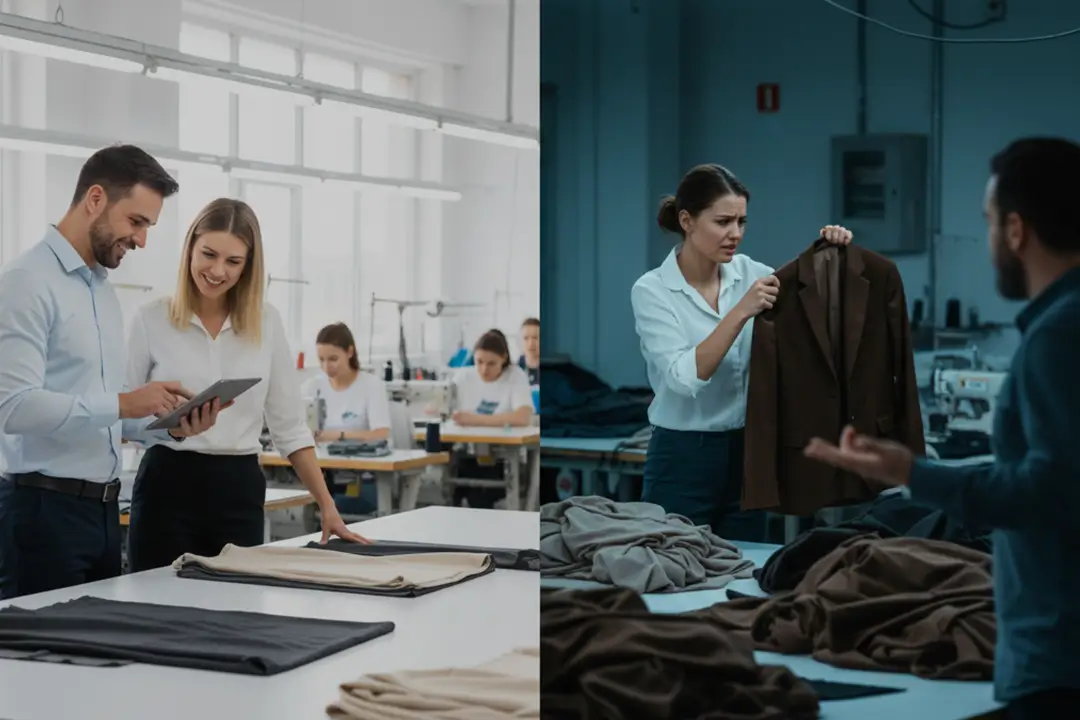
How to Find a Clothing Manufacturer for Custom Apparel Production
Finding a clothing manufacturer is not just about getting a price. In real production, most problems happen because brands choose a factory before fully understanding how manufacturing actually works.
Delays, quality issues, and disputes usually start during factory selection, not during bulk production. This guide explains how to find a clothing manufacturer in a practical way, based on how custom apparel production works in real manufacturing environments.
Why Finding the Right Clothing Manufacturer Matters
In manufacturing, every step depends on the one before it. If the wrong factory is chosen, small mistakes quickly turn into large losses.
For example, if a manufacturer lacks proper production planning, even a simple delay in fabric delivery can stop the entire order. Once timelines slip, brands often miss selling seasons, marketing launches, or retailer deadlines.
A reliable manufacturer understands production flow, communicates clearly, and follows approvals exactly. This protects both your product quality and your brand reputation.
Where to Find Manufacturers for Clothes
There are many places to search, but not all sources are equal.
Online platforms and manufacturer directories
Online sourcing platforms are often the first stop for brands. They help you discover suppliers quickly, but many listed “manufacturers” are actually trading companies. In production, this often causes miscommunication because decisions are passed through multiple layers instead of being handled on the factory floor.
Trade shows, sourcing agents, and referrals
Trade shows and referrals allow direct contact with real factories. Brands that come through referrals usually start with better communication because expectations are clearer from the beginning.
Local vs overseas clothing manufacturers
Local manufacturers offer easier communication and faster turnaround, while overseas manufacturers can provide better pricing and skilled labor when managed properly. The key factor is not location, but whether the factory has experience with your product type.
How to Find the Right Clothing Manufacturer
Not every factory is suitable for custom apparel production.
Types of clothing manufacturers
Manufacturers usually fall into three categories:
- Cut, Make, Trim (CMT): These factories focus on stitching. Brands must handle fabric sourcing and design details.
- OEM / Full-package manufacturers: These factories manage fabric sourcing, sampling, production, and finishing.
- Private label manufacturers: Brands select existing designs and apply their branding.
Many disputes happen because brands assume a factory offers services it does not. Always confirm what the factory actually handles.
How to shortlist manufacturers that fit your needs
A good manufacturer asks questions before quoting. In real production, silence is rarely a good sign. Factories that do not ask about fabric, measurements, or finishing usually estimate blindly, which later leads to price changes or quality issues.
Shortlist manufacturers that:
- Have experience with similar products
- Clearly explain their process
- Respond with specific, written answers
How to check if a manufacturer can handle custom apparel
Custom apparel requires more than machines. Ask for:
- Previous samples of similar products
- Details about stitching methods and finishing
- Photos or videos of actual production lines
A factory’s willingness to explain its process often reflects how well it is organized internally.
How to Vet Clothing Manufacturers Before You Commit
Vetting is where many brands rush and later regret it.
Key questions to ask clothing manufacturers
Ask practical questions that affect production:
- What is the MOQ per style and color?
- How long does sampling take?
- What are the payment terms?
- How are quality issues handled?
Professional manufacturers answer clearly and document agreements.
What documents and proof you should request
Request basic proof such as:
- Factory profile or registration
- Sample photos or physical samples
- Quality or compliance information if available
These are normal requests in manufacturing and should not be avoided.
How to evaluate samples and workmanship
In production, samples are often made by senior operators, while bulk orders are handled by full production lines. That is why sample approval must be detailed.
Check:
- Stitch consistency
- Fabric feel and weight
- Measurements against size charts
- Print or embroidery alignment
Never approve bulk production casually.
Understanding Minimum Order Quantities, Lead Times & Pricing
These factors are closely connected in manufacturing.
What MOQ means and why it matters
MOQ exists because machines, labor, and setup time remain the same regardless of order size. Lower quantities increase per-unit cost because efficiency drops.
Sample timelines vs bulk production timelines
Typical timelines:
- Sampling: 1–3 weeks
- Bulk production: 4–8 weeks
In practice, fabric availability affects timelines more than stitching capacity.
Hidden costs you should expect
Common overlooked costs include:
- Sample revisions
- Fabric price fluctuations
- Shipping and customs
- Rework caused by late changes
Clear communication prevents most surprises.
How the Clothing Production Process Works
Understanding the process helps brands make better decisions.
From tech pack to first sample
Production starts with clear instructions. Factories rely on written details, not assumptions. Missing information often results in incorrect samples.
Sample approval and revisions
Once bulk cutting begins, changes are costly or impossible. This is why sample approval should always be formal and documented.
Bulk production and quality checks
Quality issues are easier to fix during production than after completion. Factories that monitor quality throughout production reduce rejection risk significantly.
Common Red Flags When Choosing a Clothing Manufacturer
Certain patterns consistently lead to problems.
Pricing that sounds too good to be true
Extremely low pricing often means compromises in fabric quality, stitching, or finishing.
Poor communication and unclear answers
In manufacturing, unclear communication usually reflects weak internal processes.
Refusal to provide samples or written terms
Factories that avoid documentation often lack standardized production systems.
Final Tips to Secure a Clothing Manufacturer You Can Trust
Start with a small trial order
Trial orders test reliability without major risk.
Keep everything documented
Written approvals protect both sides once production starts.
Think long-term, not one order
Manufacturers perform best when relationships are stable and expectations are clear.